
Running a small business in Cleveland means competing with national chains, regional players, and dozens of other local shops — often on a fraction of their marketing budget. The good news: digital marketing is one of the few arenas where an independent business can legitimately outmaneuver a big-box competitor. The key is knowing which strategies to prioritize and how to execute them for a Northeast Ohio audience.
After years of working with businesses across Cleveland, Middleburg Heights, and the surrounding region, we've seen what works and what wastes budget. This guide covers the six digital marketing strategies every Cleveland small business should have in place — and what to focus on within each one.
- Your Google Business Profile is the single highest-ROI digital asset for a local business — claim and optimize it first
- Local SEO builds compounding visibility over time; paid search (PPC) delivers leads immediately while SEO develops
- Social media and email marketing build the repeat business and community trust that sustain long-term growth
- Digital marketing works as a system — each channel reinforces the others; gaps in one hurt performance across all
Claim and Optimize Your Google Business Profile
If you do nothing else on this list, do this. Your Google Business Profile (formerly Google My Business) is the single most important digital asset for a local business. It controls what appears when someone searches for you directly, and it determines whether you show up in the local map pack — the three-business block that appears above organic results for searches like "marketing agency near me" or "Cleveland HVAC company."
The basics matter more than most people realize:
- Name, address, and phone number (NAP) must be consistent — exactly matching what's on your website and all other directories
- Business category should be specific, not broad; choose a primary category that matches your core service
- Photos should be updated regularly — profiles with fresh photos get significantly more clicks than those with stale or stock imagery
- Services and products sections should be filled out completely, including descriptions and pricing ranges where applicable
- Q&A is often neglected — pre-populate it with the questions your customers actually ask
Post to your Google Business Profile at least once a week. These posts appear directly in search results and keep your profile active — a signal Google factors into local ranking. Treat it like a social media channel with real copy and images, not an afterthought.
Reviews are the other half of the equation. A profile with 50 four-star reviews will consistently outrank one with five five-star reviews. Build a system for asking satisfied customers to leave a review — a follow-up email with a direct link removes all the friction.
Invest in Local SEO
Local Search Engine Optimization is the discipline of getting your website to rank for searches that include a location modifier — "Cleveland plumber," "Middleburg Heights dentist," "Northeast Ohio marketing agency" — or searches where Google infers local intent from the user's location.
For small businesses, local SEO almost always produces a better return than trying to rank nationally. The competition is narrower, the intent is higher (someone searching "electrician in Lakewood" is ready to call), and the conversion rates are better. Here's where to focus:
- On-page location signals — your city and region should appear naturally in your page titles, headings, and body copy. Don't keyword-stuff; write for humans and work the geography in contextually
- Service area pages — if you serve multiple cities or suburbs, a well-written page for each service area can capture separate ranking opportunities
- Local citations — your NAP should appear consistently in Yelp, BBB, Angi, Bing Places, Apple Maps, and relevant industry directories
- Schema markup — adding structured data (LocalBusiness schema) helps search engines understand your location and services without ambiguity
"The businesses that show up first in local search aren't necessarily the best — they're the ones that have done the work to tell Google exactly who they are, where they are, and who they serve."
Technical health matters too. A slow website, broken mobile experience, or missing SSL certificate can undercut every other SEO effort. Run a technical audit before investing heavily in content — you want a solid foundation first.
Run Targeted Pay-Per-Click Ads
SEO is a long game. Pay-Per-Click advertising (Google Ads, in particular) delivers leads now, while your organic rankings are building. For high-intent local searches — "emergency plumber Cleveland," "custom kitchen cabinets Northeast Ohio" — the top ad positions capture a large share of clicks from people who are ready to buy.
The most common mistake small businesses make with Google Ads is running campaigns that are too broad. "Digital marketing" is a national keyword with national competition and national pricing. "Digital marketing agency Cleveland" is a local keyword where you can compete on a realistic budget.
What to focus on for Cleveland businesses
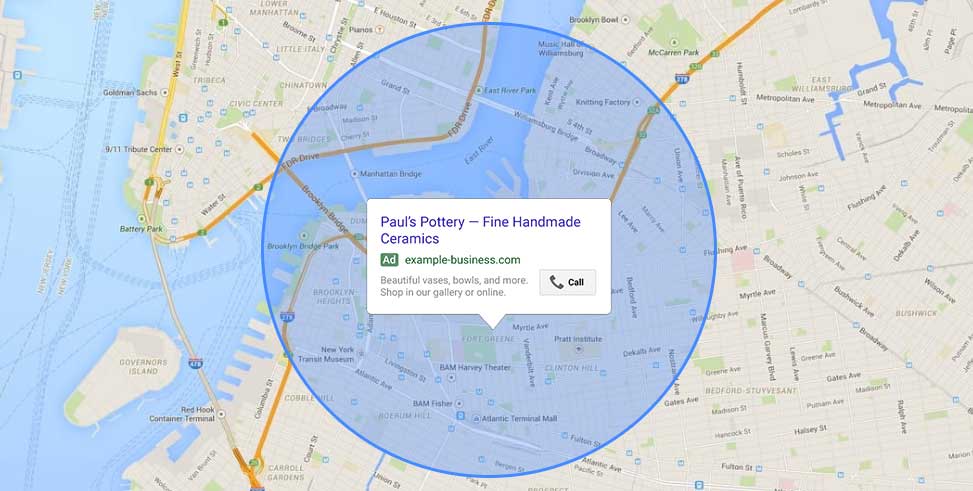
- Geo-targeting — limit your ads to the specific ZIP codes, cities, or radius you actually serve; every click outside your service area is wasted spend
- Negative keywords — exclude searches like "free," "DIY," "jobs," and "reviews" unless those map to your business model
- Ad extensions — call extensions, location extensions, and sitelink extensions increase your ad's size and click-through rate at no extra cost-per-click
- Landing pages — sending paid traffic to your homepage kills conversion rates; build a dedicated page that matches the ad's message exactly
Meta (Facebook and Instagram) advertising is also worth considering for businesses with a strong visual product or local brand-building goals. The targeting capabilities — age, household income, interests, geographic radius — are unmatched for reaching a specific Cleveland-area audience.
Build a Social Media Presence That Converts
Organic social reach has declined significantly over the past several years, but social media management still matters for Cleveland small businesses — particularly for the trust and community signals it creates. When a potential customer looks you up, they will check your social profiles. An active, well-presented page communicates that you're legitimate, engaged, and worth calling.
The mistake most small businesses make is trying to be everywhere. Pick one or two platforms where your customers actually spend time and commit to those. For most B2C businesses, Instagram and Facebook are the priority. For B2B, LinkedIn produces better leads. For home services and retail, don't overlook Nextdoor — it's heavily used in Northeast Ohio suburbs and has less competition than the major platforms.
Content that performs well for local businesses: before-and-after photos, behind-the-scenes process content, team spotlights, customer testimonials, and posts that reference Cleveland specifically (local events, landmarks, neighborhoods). The more local and specific your content, the more it resonates with a Northeast Ohio audience.
Use Video to Stand Out in the Feed
Every major platform now prioritizes video content in its algorithm. This isn't changing. Video production used to feel out of reach for small businesses, but the bar for effective video has actually lowered — authentic, well-lit, story-driven content shot on an iPhone consistently outperforms polished corporate productions in the feed.
For Cleveland small businesses, the most effective video formats right now are:
- Short-form social clips (15–60 seconds) for Instagram Reels, Facebook, and YouTube Shorts — showcase a transformation, tell a quick customer story, or answer a common question
- Brand story video (60–120 seconds) for your website homepage and Google Business Profile — explains who you are, what you do, and why customers should choose you
- Testimonial videos — a real customer talking to camera about their experience is the most credible marketing asset you can create; a two-minute testimonial on your website can be edited into a dozen social clips
Think of every video shoot as a content multiplier. A one-hour shoot with a customer produces a homepage brand video, three to five social clips, a YouTube testimonial, a Google Business Profile post, and screenshots for your website. Plan the distribution before you shoot.
Don't Overlook Email Marketing
Email marketing has a higher ROI than almost any other digital channel — but it's routinely underused by small businesses because building a list feels slow and unglamorous. For Cleveland businesses with a repeat-purchase model (restaurants, retailers, service providers with seasonal demand), email is the most direct line to your existing customer base.
The fundamentals of an effective email marketing program for a local business:
- Build the list actively — ask for emails at checkout, on receipts, at events, and on your website; offer something in return (a discount, a checklist, exclusive early access)
- Segment by behavior — a customer who bought once two years ago should get a different email than someone who bought last month
- Send consistently — monthly at minimum; twice a month is better for most businesses; daily is only appropriate for specific e-commerce contexts
- Local hooks — reference the Cleveland seasons (winter prep checklists, summer specials), local events, and community news; it signals that you're a local business, not a national chain
Putting It All Together
None of these strategies works in isolation. A business with strong local SEO and a neglected Google Business Profile will leave rankings on the table. A well-run paid search campaign that sends traffic to a slow, mobile-unfriendly website will bleed budget. The most effective Cleveland small businesses treat digital marketing as a system, not a checklist.
Start where you have the biggest gap. For most businesses, that's Google Business Profile and local SEO — both are foundational and compound over time. Once that foundation is solid, layer in paid advertising to accelerate lead flow, and use social media and email to build the community and repeat business that make growth sustainable.
The Cleveland market rewards businesses that commit consistently. The businesses showing up at the top of local search results didn't get there in a month — they built that presence steadily, channel by channel.
For most Cleveland small businesses, Google Business Profile optimization and Local SEO deliver the highest return on investment. They target people actively searching for your products or services nearby — the highest-intent audience you can reach. Once that foundation is solid, layer in paid search to accelerate lead flow and social media to build long-term community trust.
Most benchmarks suggest 5–10% of gross revenue, with digital comprising the majority for local businesses. In Northeast Ohio, a well-structured program covering Local SEO, a modest paid search budget, and basic social media management can be effective starting around $1,500–$3,000 per month depending on your industry and competition level.
Most local businesses see meaningful movement in Google rankings within 3–6 months of consistent SEO work. Google Business Profile improvements can produce visible results in weeks. Full competitive ranking in dense markets typically takes 6–12 months. SEO compounds over time — results keep growing long after the initial investment.
SEO builds organic rankings over time — it takes months to develop but delivers sustainable, compounding traffic with no per-click cost. PPC places your business at the top of search results immediately, but stops working when the budget stops. The most effective local strategies use both: PPC for immediate lead flow while SEO builds long-term visibility.
Yes — not because organic reach is high (it isn't), but because social media is a credibility checkpoint. When a potential customer finds your business through Google, they'll check your social profiles before deciding to contact you. An active, well-maintained presence signals your business is legitimate and engaged. It also builds a retargeting audience for paid advertising.